What is a lead magnet funnel?
A lead magnet funnel is the path a stranger takes from seeing a free offer to becoming a customer: they find the offer, give their email address for it, read it, receive your follow-up emails, and are asked to take a next step. Each stage loses people, so each has one job.
What it means in practice
Each stage has a job, and you can check them one at a time:
- Offer. A page that says who the book is for and what it solves.
- Sign-up. A short form, and a clear opt-in.
- Delivery. The book, quickly, in a file that opens anywhere.
- Follow-up. A welcome sequence that keeps teaching.
- Next step. One specific thing to do: book a call, buy the longer book, start a trial.
Measure where people drop out before rewriting everything. A page with many visits and few sign-ups has a different problem from a list that signs up and never replies.
How Chapbook uses it
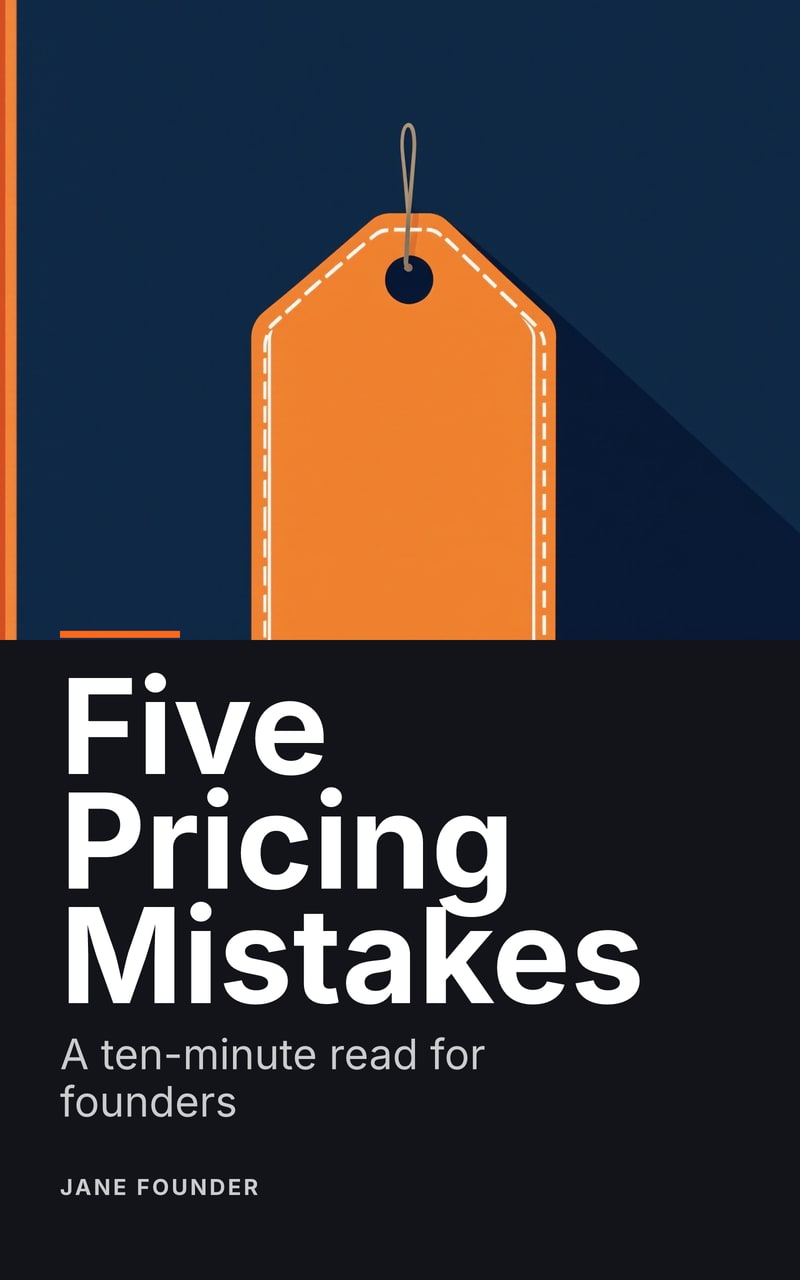
Chapbook covers the parts around the book. A lead magnet can end on a Next step page once you add your link. On a paid plan, a public page offers it, collects sign-ups and counts views, sign-ups and conversion for each named link you share. Sign-ups land in your Readers list. Export the list as a CSV and import it into Kit, Mailchimp, Beehiiv, MailerLite or any other email tool, which can ask each reader to confirm.
The launch campaign writes the follow-up emails, with their links tagged by channel. Your email tool sends them. Chapbook sends nothing and posts nothing, and it can’t promise a result from any of it.
In a real book


Related terms
- What is a lead magnet? A lead magnet is something useful given away free in exchange for an email address. What makes one work, the usual formats, and how it differs from an ebook.
- What is opt-in? Opt-in means a person actively agrees to receive your email before joining your list. What counts as agreeing, and how Chapbook's sign-up form records it.
- What is a welcome sequence? A welcome sequence is a short series of automatic emails a new subscriber gets after signing up. What each email does, and the one Chapbook writes from your book.
Make one
Questions people ask
What is the difference between a lead magnet and a lead magnet funnel?
The lead magnet is the free thing you give away. The funnel is everything around it: the page that offers it, the sign-up, the emails that follow, and the next step you ask readers to take.
Does Chapbook run the whole funnel?
No. It makes the book and, on a paid plan, the page and the sign-up, and it writes the emails. Your own email tool sends them, because Chapbook never emails a reader.
Read a chapter of your own book before you pay for it.
The outline, one sample chapter up to 2,500 words and a watermarked cover are free: 60 Book Credits on sign-up, no card.