Skip to content

This book was written from one paragraph.

Chapbook turned the brief below into 43 typeset pages: a digital PDF, an EPUB 3 and a KDP-sized cover, unedited. Write yours and read chapter one free.

Type of book

Free: a working title, the outline and one chapter, typeset, with a watermarked cover. An account to read it, a card only for the whole book.
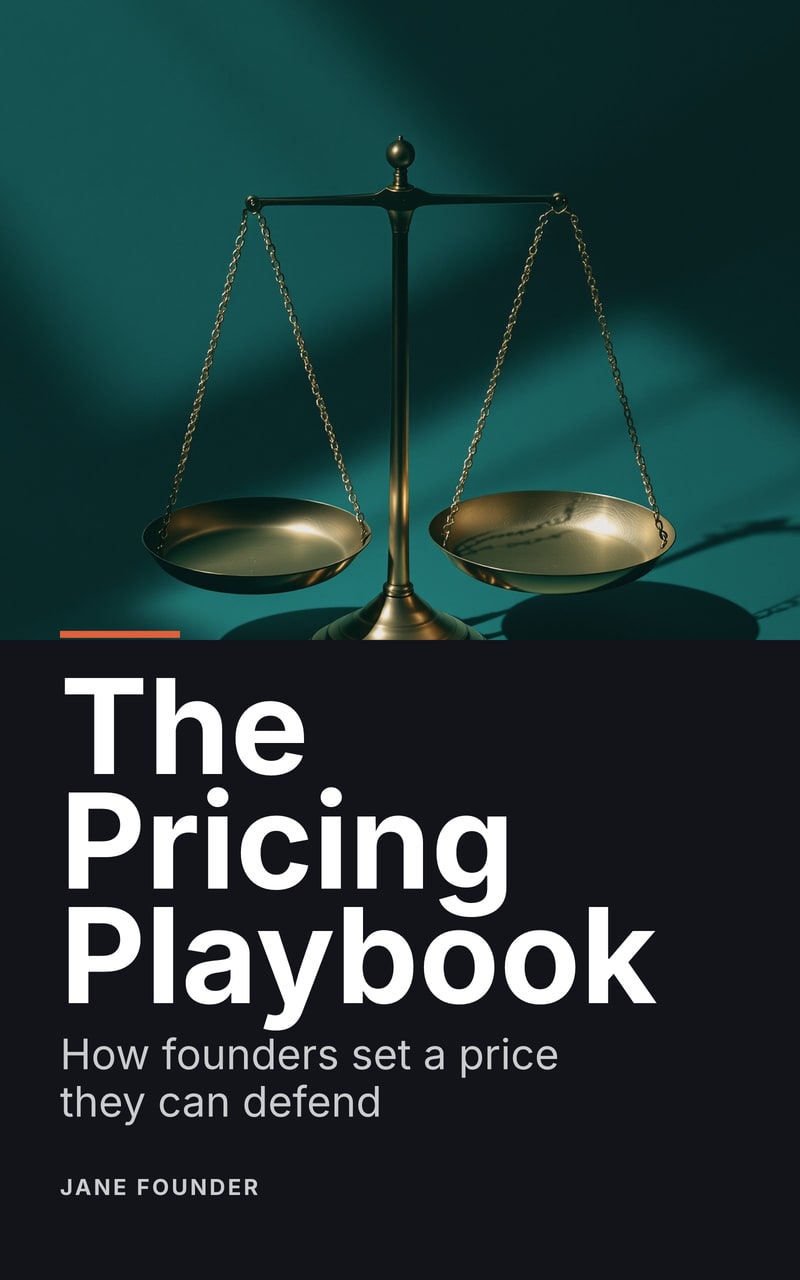
Cover of The Pricing Playbook by Jane Founder: a brass balance scale lit from the left on deep teal above white type, subtitle “How founders set a price they can defend”.
Title page. Page 1 of The Pricing Playbook.
Copyright. Page 2 of The Pricing Playbook.
Contents. Page 3 of The Pricing Playbook.
Introduction. Page 4 of The Pricing Playbook.
Introduction. Page 5 of The Pricing Playbook.
Why Guessing Fails. Page 6 of The Pricing Playbook.
Why Guessing Fails. Page 7 of The Pricing Playbook.
Why Guessing Fails. Page 8 of The Pricing Playbook.
Why Guessing Fails. Page 9 of The Pricing Playbook.
What You Are Actually Selling. Page 10 of The Pricing Playbook.
What You Are Actually Selling. Page 11 of The Pricing Playbook.
What You Are Actually Selling. Page 12 of The Pricing Playbook.
What You Are Actually Selling. Page 13 of The Pricing Playbook.
Interview Ten Customers. Page 14 of The Pricing Playbook.
Interview Ten Customers. Page 15 of The Pricing Playbook.
Interview Ten Customers. Page 16 of The Pricing Playbook.
Interview Ten Customers. Page 17 of The Pricing Playbook.
Interview Ten Customers. Page 18 of The Pricing Playbook.
Choose the Value Metric. Page 19 of The Pricing Playbook.
Choose the Value Metric. Page 20 of The Pricing Playbook.
Choose the Value Metric. Page 21 of The Pricing Playbook.
Choose the Value Metric. Page 22 of The Pricing Playbook.
Draft Three Tiers. Page 23 of The Pricing Playbook.
Draft Three Tiers. Page 24 of The Pricing Playbook.
Draft Three Tiers. Page 25 of The Pricing Playbook.
Draft Three Tiers. Page 26 of The Pricing Playbook.
Set the Numbers. Page 27 of The Pricing Playbook.
Set the Numbers. Page 28 of The Pricing Playbook.
Set the Numbers. Page 29 of The Pricing Playbook.
Set the Numbers. Page 30 of The Pricing Playbook.
Say the Price Out Loud. Page 31 of The Pricing Playbook.
Say the Price Out Loud. Page 32 of The Pricing Playbook.
Say the Price Out Loud. Page 33 of The Pricing Playbook.
Say the Price Out Loud. Page 34 of The Pricing Playbook.
Revisit Every Quarter. Page 35 of The Pricing Playbook.
Revisit Every Quarter. Page 36 of The Pricing Playbook.
Revisit Every Quarter. Page 37 of The Pricing Playbook.
Revisit Every Quarter. Page 38 of The Pricing Playbook.
Conclusion. Page 39 of The Pricing Playbook.
Conclusion. Page 40 of The Pricing Playbook.
Appendix: The Interview Script. Page 41 of The Pricing Playbook.
Appendix: The Interview Script. Page 42 of The Pricing Playbook.
Back cover of The Pricing Playbook: the description over the cover's artwork.
Cover1 / 44

The paragraph it came from

A repeatable method for pricing software: customer interviews, a value metric, tiering, and setting numbers you can defend. Promise: A repeatable method for setting a price you can defend to customers, investors and yourself, validated by ten customer interviews in a week. Reader: A founder who priced by guessing or by copying a competitor and now has to defend or change the number. Voice: Direct second person with occasional first person; worked examples with fictional companies; tables where they clarify; no invented statistics or named studies: reason from mechanics and examples.

That is the whole brief, as typed into the app's guided fields.The outline it produced

43 pages
Digital PDF, 381 KB. Fonts embedded, clickable contents, running heads.
9,862 words
EPUB 3, 107 KB, with a navigable table of contents. Validated against EPUBCheck.
Cover of The Pricing Playbook by Jane Founder: a brass balance scale lit from the left on deep teal above white type, subtitle “How founders set a price they can defend”.
Cover JPEG at 1600 × 2560, the size Amazon KDP asks for.

four more books, opened flat. Turn them.

Open them full size

The Pricing Playbook above is one of seven samples, each generated from its own brief and exported unedited. Here are four of the others, in three interior themes, each with its own generated cover. Every leaf is a render of the PDF you can download, and all seven are on the examples page.

Cover of Five Pricing Mistakes by Jane Founder: a flat orange price tag on deep navy above white type, subtitle “A ten-minute read for founders”.
Title page. Page 1 of Five Pricing Mistakes.
Copyright. Page 2 of Five Pricing Mistakes.
Contents. Page 3 of Five Pricing Mistakes.
Introduction. Page 4 of Five Pricing Mistakes.
Mistake 1: Copying a competitor. Page 5 of Five Pricing Mistakes.
Mistake 1: Copying a competitor. Page 6 of Five Pricing Mistakes.
Mistake 2: One tier for everyone. Page 7 of Five Pricing Mistakes.
Mistake 2: One tier for everyone. Page 8 of Five Pricing Mistakes.
Mistake 3: Never asking. Page 9 of Five Pricing Mistakes.
Mistake 3: Never asking. Page 10 of Five Pricing Mistakes.
Mistake 4: Anchoring on your costs. Page 11 of Five Pricing Mistakes.
Mistake 4: Anchoring on your costs. Page 12 of Five Pricing Mistakes.
Mistake 5: Never revisiting the number. Page 13 of Five Pricing Mistakes.
Mistake 5: Never revisiting the number. Page 14 of Five Pricing Mistakes.
What to do instead. Page 15 of Five Pricing Mistakes.
What to do instead. Page 16 of Five Pricing Mistakes.
Back cover of Five Pricing Mistakes: the description over the cover's artwork.
Introduction5 / 18
Cover of Five Pricing Mistakes by Jane Founder: a flat orange price tag on deep navy above white type, subtitle “A ten-minute read for founders”.

Five Pricing Mistakes

A ten-minute read for founders

Lead magnet, 3,735 words, 17 pages

Editorial look, artwork cover

Open full size

Cover of World Book Day by Larkspur Books: a watercolour still life of stacked books, a teacup, a terracotta vase and green sprigs on cream, above a script title in dark brown, subtitle “A day of reading at Larkspur Books”.
Start the Day with a Story. Page 1 of World Book Day.
Make a Book to Keep. Page 2 of World Book Day.
Twenty Years on Wren Street. Page 3 of World Book Day.
Stay for the Open Evening. Page 4 of World Book Day.
Find Us and Join Us. Page 5 of World Book Day.
Back cover of World Book Day: the description over the cover's artwork.
Start the Day with a Story2 / 7
Cover of World Book Day by Larkspur Books: a watercolour still life of stacked books, a teacup, a terracotta vase and green sprigs on cream, above a script title in dark brown, subtitle “A day of reading at Larkspur Books”.

World Book Day

A day of reading at Larkspur Books

Brochure, 612 words, 6 pages

Warm look, artwork cover

Open full size
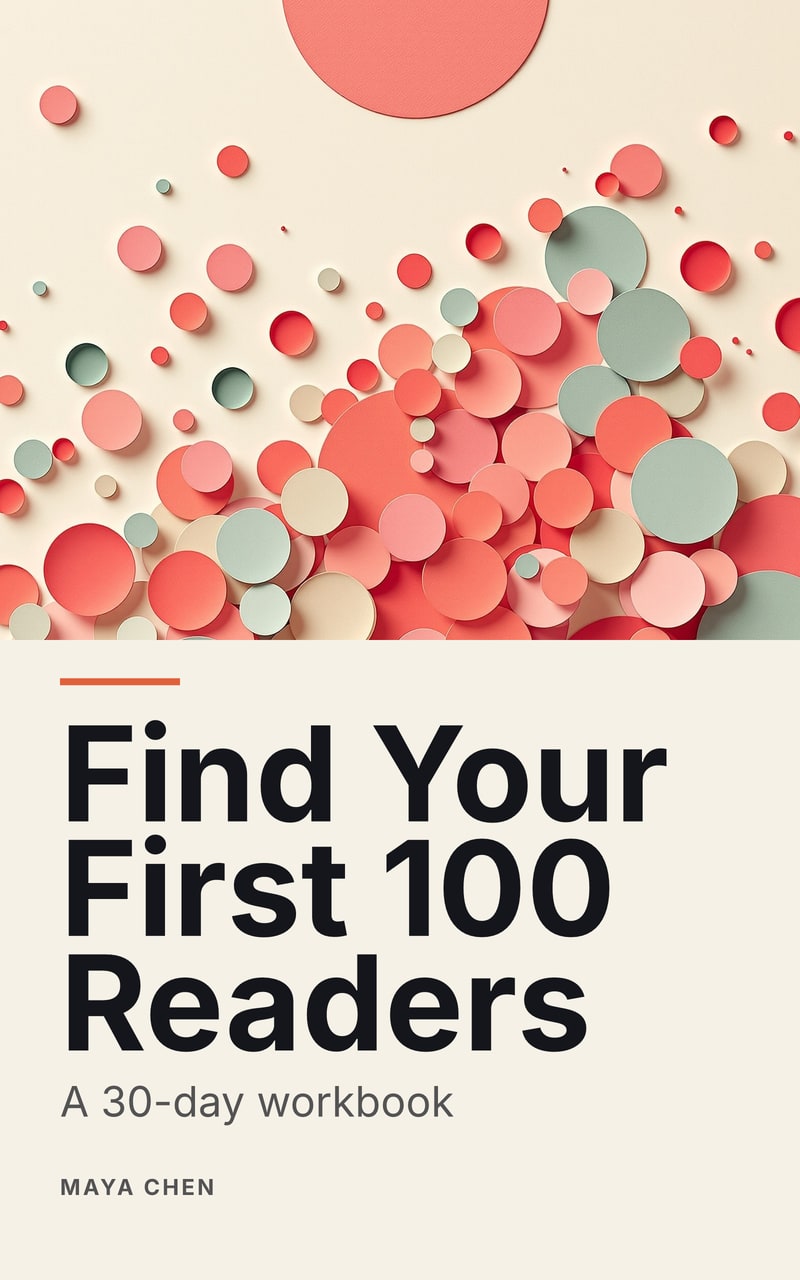
Cover of Find Your First 100 Readers by Maya Chen: layered paper-cut shapes in coral, sage and peach on cream, subtitle “A 30-day workbook”.
Title page. Page 1 of Find Your First 100 Readers.
Copyright. Page 2 of Find Your First 100 Readers.
Contents. Page 3 of Find Your First 100 Readers.
How to Use This Workbook. Page 4 of Find Your First 100 Readers.
How to Use This Workbook. Page 5 of Find Your First 100 Readers.
Week 1: Your Reader. Page 6 of Find Your First 100 Readers.
Week 1: Your Reader. Page 7 of Find Your First 100 Readers.
Week 1: Your Reader. Page 8 of Find Your First 100 Readers.
Week 1: Your Reader. Page 9 of Find Your First 100 Readers.
Week 2: Your Promise and Your Page. Page 10 of Find Your First 100 Readers.
Week 2: Your Promise and Your Page. Page 11 of Find Your First 100 Readers.
Week 2: Your Promise and Your Page. Page 12 of Find Your First 100 Readers.
Week 2: Your Promise and Your Page. Page 13 of Find Your First 100 Readers.
Week 3: Where Your Readers Already Gather. Page 14 of Find Your First 100 Readers.
Week 3: Where Your Readers Already Gather. Page 15 of Find Your First 100 Readers.
Week 3: Where Your Readers Already Gather. Page 16 of Find Your First 100 Readers.
Week 3: Where Your Readers Already Gather. Page 17 of Find Your First 100 Readers.
Week 4: Ask, Deliver, Repeat. Page 18 of Find Your First 100 Readers.
Week 4: Ask, Deliver, Repeat. Page 19 of Find Your First 100 Readers.
Week 4: Ask, Deliver, Repeat. Page 20 of Find Your First 100 Readers.
Week 4: Ask, Deliver, Repeat. Page 21 of Find Your First 100 Readers.
Day 30: The Review and the Routine. Page 22 of Find Your First 100 Readers.
Day 30: The Review and the Routine. Page 23 of Find Your First 100 Readers.
Back cover of Find Your First 100 Readers: the description over the cover's artwork.
How to Use This Workbook5 / 25
Cover of Find Your First 100 Readers by Maya Chen: layered paper-cut shapes in coral, sage and peach on cream, subtitle “A 30-day workbook”.

Find Your First 100 Readers

A 30-day workbook

Workbook, 5,850 words, 24 pages

Editorial look, artwork cover

Open full size

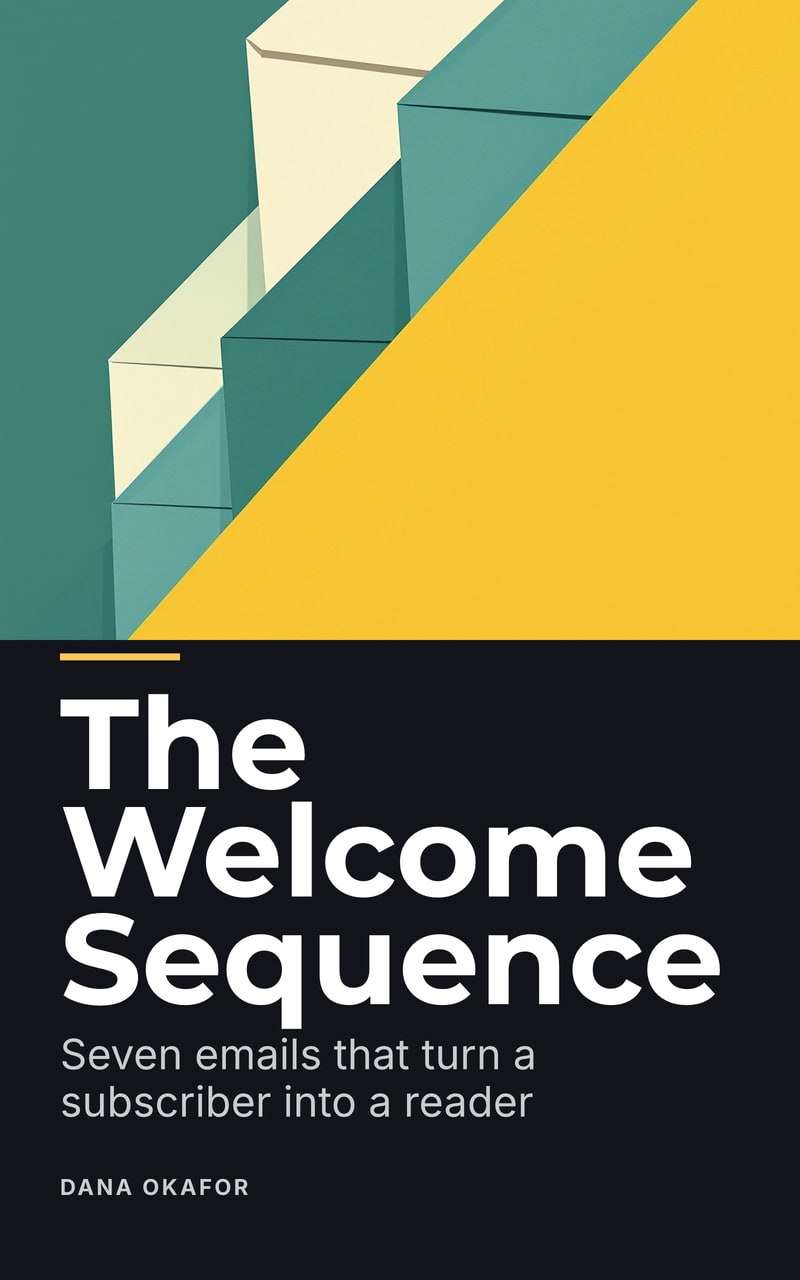
Cover of The Welcome Sequence by Dana Okafor: flat paper-cut envelopes stepping upward in teal, cream and yellow above white type, subtitle “Seven emails that turn a subscriber into a reader”.
Title page. Page 1 of The Welcome Sequence.
Copyright. Page 2 of The Welcome Sequence.
Contents. Page 3 of The Welcome Sequence.
Introduction. Page 4 of The Welcome Sequence.
Email 1: The one they actually open. Page 5 of The Welcome Sequence.
Email 1: The one they actually open. Page 6 of The Welcome Sequence.
Emails 2 and 3: Who you are and what to expect. Page 7 of The Welcome Sequence.
Emails 2 and 3: Who you are and what to expect. Page 8 of The Welcome Sequence.
Emails 2 and 3: Who you are and what to expect. Page 9 of The Welcome Sequence.
Emails 4 and 5: Your best two pieces, reframed. Page 10 of The Welcome Sequence.
Emails 4 and 5: Your best two pieces, reframed. Page 11 of The Welcome Sequence.
Emails 6 and 7: The ask, and the door left open. Page 12 of The Welcome Sequence.
Emails 6 and 7: The ask, and the door left open. Page 13 of The Welcome Sequence.
Emails 6 and 7: The ask, and the door left open. Page 14 of The Welcome Sequence.
The schedule and the template. Page 15 of The Welcome Sequence.
The schedule and the template. Page 16 of The Welcome Sequence.
Back cover of The Welcome Sequence: the description over the cover's artwork.
Introduction5 / 18
Cover of The Welcome Sequence by Dana Okafor: flat paper-cut envelopes stepping upward in teal, cream and yellow above white type, subtitle “Seven emails that turn a subscriber into a reader”.

The Welcome Sequence

Seven emails that turn a subscriber into a reader

Lead magnet, 3,626 words, 17 pages

Modern look, artwork cover

Open full size

The files, in the formats stores ask for.

Digital PDFapplication/pdf
Fonts embedded, clickable contents, title and copyright pages, running folios. US Letter or 6 × 9 in.
EPUB 3application/epub+zip
Reflowable, with a navigable table of contents. Every build of the pipeline is validated against EPUBCheck in CI.
Cover JPEG1600 × 2560
1600 × 2560 pixels, the ebook cover size Amazon KDP asks for. Generated from your brief, or upload your own.
Publishing checklistbefore you upload
Title, description, categories, keywords, the file checks to run, and the AI-content disclosure Amazon KDP requires.

Sell it where you already sell. Or give it away.

Sold as a file

  • Amazon KDP ebook
  • Etsy
  • Gumroad
  • Lemon Squeezy
  • Payhip
  • Your own site

Traded for an email address

  • Your newsletter
  • Substack
  • A landing page
  • Link in bio

A lead magnet is the same PDF; it goes out for an email address instead of a price. We do not upload or send it for you — you download the files and publish them under your own name and account, with the checklist to hand.

Four steps. You approve the outline first.

  1. Write the brief

    Pick a lead magnet, a workbook or a nonfiction book. Say who it is for, what it promises and how it should sound. Add notes, PDFs or web pages as sources if you have them.

  2. Read the free outline, a sample chapter and the cover

    Chapbook proposes titles and a chapter-by-chapter outline you can reorder and rewrite. Then it drafts one chapter of up to 2,500 words and a watermarked cover, so you can judge the voice before paying anything.Uses up to 10 credits

  3. Subscribe when the sample reads right

    Paid plans have the same features and differ only in monthly credits. Top-up credits never expire.

  4. Generate, edit, export

    Draft up to 40,000 words chapter by chapter in the background; a closed tab loses nothing. Rewrite, expand or shorten a passage, or ask for a read-through of the whole book. Export the PDF, the EPUB and the cover.Uses up to 320 creditsfor a full 40,000-word draft. Credits reserved for words that were not written are refunded.

Plans sized to how much you write.

Free

$0

60 Book Credits, once. No card.

Creator

$29 / month

300 Book Credits a month

Covers a 25,000-word book in one month

Author

$49 / month

750 Book Credits a month

Studio

$99 / month

2,000 Book Credits a month

Sold direct at $14.99, two copies cover a month of Creator. Arithmetic for your own site or Gumroad, not a forecast; store royalties differ.

Full pricing: top-ups, what each credit buys, and a calculator →

What it does not do yet.

  • English only. Left-to-right English at launch.
  • Nonfiction only. Lead magnets, workbooks and nonfiction books. No fiction yet.
  • Digital only. No print interiors, wraps or spines yet.
  • You upload. We prepare the files and the checklist; the store account and the upload are yours.
  • No OCR. Scanned PDFs are not read at launch. Text PDFs, notes and web pages are.
  • Disclose AI content. Amazon KDP requires it when you publish; the checklist reminds you. We do not promise sales, rankings or acceptance by any store.

Questions people ask before starting.

What do I see before I pay?

The complete outline, one drafted chapter of up to 2,500 words and a watermarked cover, on the free plan's 60 credits. If the chapter does not read the way you want, change the brief or the outline and draft it again before you subscribe.

How much of the book do I write myself?

The brief and the decisions. You describe the reader, the promise and the voice; you approve or rewrite the outline; then you read each chapter as it lands and rewrite, expand or shorten what you want changed. The drafting is done for you, chapter by chapter, against the outline you approved.

Can I bring my own notes and research?

Yes. Add up to 10 sources: PDFs, text or web pages. Extracting them is free; an AI summary of a source costs credits. Chapters can cite a source inline, and the read-through flags any claim that no source supports.

Will it make things up?

It can, like any model, so the workflow assumes you will check. The read-through flags figures and claims with no supporting source, citations that do not match their source, contradictions between chapters and promises from the brief the text did not keep, naming the chapter and quoting the sentence. Fact-checking before you publish stays your job.

What does a credit buy, and what if a chapter comes out short?

Every action has a fixed price you see before it runs: 10 credits for titles, an outline or a research plan; 1 per 125 words drafted, rewritten, expanded or shortened; 1 per 1,000 words for a read-through; 20 per AI cover candidate, so 40 for the batch of 2 a cover job produces. Text actions reserve credits for the length you asked for and refund the difference if fewer words arrive. Editing by hand, previews and source extraction are free.

Can I sell it, and do I own it?

Yes to both. You own the manuscript, the cover and the exported files, subject to the Chapbook terms; we claim nothing. Sell it under your own name, at your own price, on any store or your own site. Amazon KDP requires you to disclose AI-generated content when you publish, and the checklist reminds you.

Do you upload it to Amazon for me?

No. You get a digital PDF, an EPUB 3, a cover JPEG at 1600 × 2560 and a checklist of what to fill in and check before uploading. You upload with your own account. We do not guarantee acceptance by any store.

What happens to my books if I cancel?

Everything you exported stays yours, your manuscripts stay editable, and top-up credits keep working for AI actions. Only creating new clean exports needs an active subscription; resubscribing restores it.

Read a chapter of your own book before you pay for it.

The outline, one sample chapter up to 2,500 words and a watermarked cover are free: 60 Book Credits on sign-up, no card.