The Chapbook affiliate programme
Chapbook pays affiliates 30% of what each customer they refer pays in their first 12 months, after tax and refunds. A customer counts when they make an account through your link and first pay within 60 days of signing up. We pay by hand each month. You say clearly, every time you share the link, that you earn a commission.
The terms
- Commission
- 30% of every payment a customer you referred makes in the 12 months from their first payment: a plan, monthly or yearly, extra credits or a Book Pass. Counted after tax, and after any refund.
- Who counts
- Someone who makes a Chapbook account through your link while you are an affiliate, and makes their first payment within 60 days of signing up. Accounts made before you became an affiliate do not count.
- How the link is remembered
- In the browser tab your link opens, not in a cookie, until the person signs up. If they close the tab and come back another day without your link, the account is not yours. The first link of a visit wins.
- Your link
- The referral link on your Plan and billing page: chapbook.ink/?ref= followed by your code. Your account can be on any plan, the free one included.
- Payment
- Monthly, by hand, for the month before, by Wise or PayPal, in the currency your customers paid in. You get a total; we never tell you who your customers are.
- Refunds
- A refund takes back the commission its payment earned, in the month it is refunded. A month can come out below zero, and that comes off your next payment.
- Ending
- You can stop at any time by email, and we can end it, at once if a rule below is broken. Nothing paid after the end earns commission.
Say that you are paid
- Say that you earn a commission every time you share your link: in the post, the video, the email or the page itself, not only in your bio, on an about page or behind a “more” link.
- Put it with the recommendation itself, in plain words: “I earn a commission if you buy through my link”, or “ad”. Vague words like “sp”, “spon” or “collab”, or a bare “thanks”, are not enough.
- In a video, put it in the video itself, not only in the description. In a livestream, repeat it now and then for people who join late.
- Write it in the language of the post. A platform’s own disclosure tool can help, but use your own words as well.
- Only say what you believe, and only describe what you have tried. If you have not made a book with Chapbook, do not say you have.
The rules
- No income claims: no “passive income”, no “earn $X”, no promise that a book will sell, rank or pay for the plan.
- No invented numbers, reviews or testimonials. Do not call a Chapbook book “KDP-ready” or promise that a store will accept it; it is “KDP-sized”.
- Do not bid on “Chapbook” or a misspelling of it in search ads, and do not use the name in an ad’s text, a domain or an account that could pass for ours.
- No coupon, voucher, deal or cashback sites.
- No spam: no unsolicited email or messages, and no posting the link where the place’s own rules forbid it.
- Your own accounts do not count: an account that shares your inbox or your company’s email domain earns no commission.
- Breaking a rule ends the commission. Nothing paid after the day we tell you earns any.
How it works
- Apply. Email us with your name, the address of your Chapbook account and where you would share the link.
- We say yes or no, by email. From the day we say yes, accounts made through your referral link count toward your commission. The link itself does not change.
- Share it, and say you are paid. Recommend Chapbook to people it suits, with the disclosure next to every link.
- We pay you monthly. Each month we total what your customers paid Chapbook, after tax and refunds, from our own payment records, and send you your share.
Why the rules are strict
Recommendations work because readers trust them. A reader who learns afterwards that you were paid, or who bought on a promise of income, trusts neither of us again. The US Federal Trade Commission’s endorsement guides require the disclosure; the rest follows what Chapbook says about itself: it makes a book, and it does not promise what the book will earn.
What you are recommending
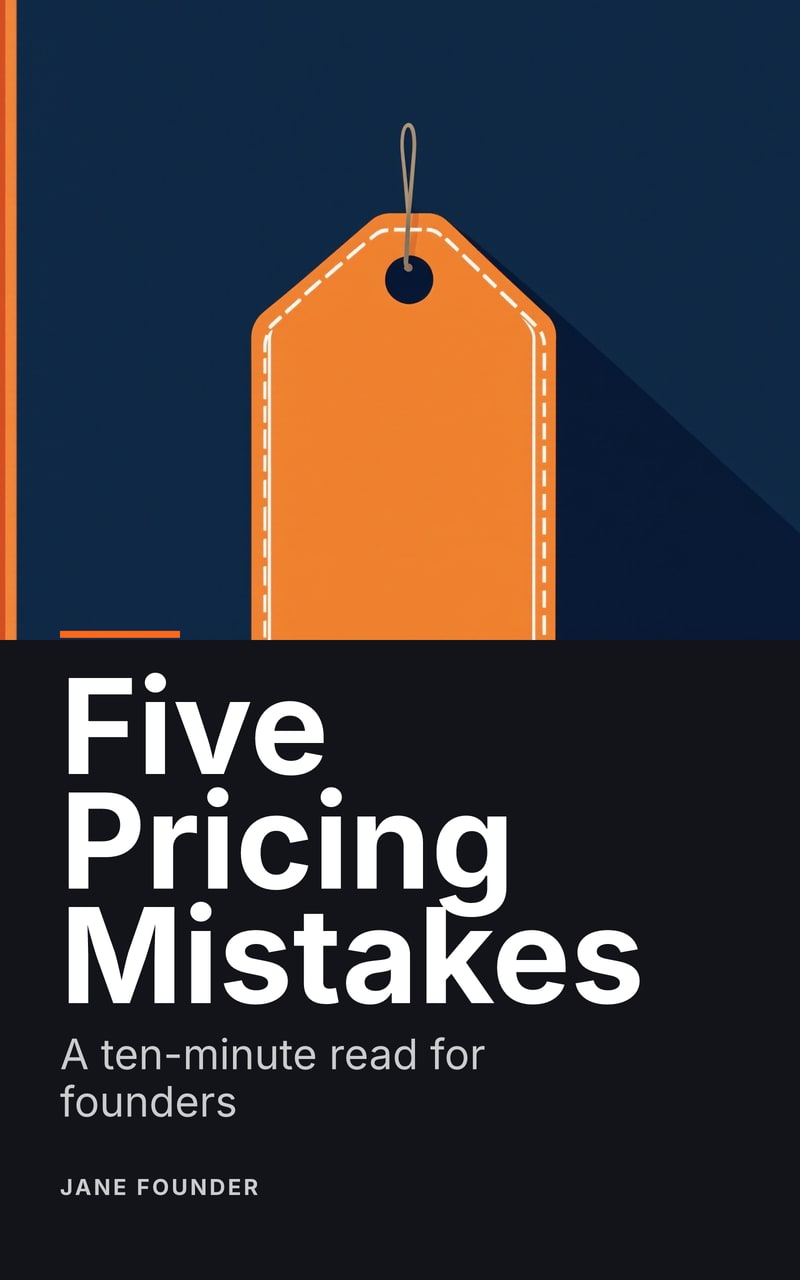
Chapbook is an AI writing studio for short nonfiction books. A one-paragraph brief becomes an outline the author approves, a manuscript they edit chapter by chapter, a cover, and a typeset PDF, an EPUB and a Word file. On a paid plan a book also gets a public page that collects readers’ email addresses. The sample below was generated from one brief and exported unedited.
Lines you can borrow
Use one only if it is true for you, and keep the disclosure in it.
- “I made my lead magnet with Chapbook: one paragraph in, an outline I approved, then a typeset PDF and EPUB. I earn a commission if you buy through my link.”
- “Chapbook turns a one-paragraph brief into a short nonfiction book that you edit chapter by chapter, and the outline is free to try. I earn a commission if you buy through my link.”
- “If your clients need a workbook, Chapbook drafts it from an outline you approve and sets it as a PDF, an EPUB and a Word file. #ad: I am paid a commission on sales through this link.”
What you would be showing


Apply
Email hello@chapbook.ink with your name, the email address of your Chapbook account, and where you would share the link. We read every one and answer by email.
Sources
Last reviewed 30 October 2026
Questions people ask
Who can be a Chapbook affiliate?
Anyone with a Chapbook account, on any plan, who agrees to the rules on this page. We approve each affiliate by email; a referral link on its own earns credits, not commission.
How much will I earn?
We do not promise any amount. You earn 30% of what the customers you refer pay in their first 12 months, after tax and refunds, and nothing else.
Do the people I refer get a discount?
No discount. When they first pay, they get 100 credits that never expire, as with any referral, and you get 100 too, beside your commission.
What happens when a customer I referred gets a refund?
The commission that payment earned is taken back in the month of the refund, so it comes off your next payment.
Does Chapbook use a tracking cookie for affiliates?
No. Your link is remembered in the visitor’s browser tab until they sign up. If they leave and come back later without your link, the account is not counted as yours.
When am I paid?
Once a month, for the month before, by Wise or PayPal, in the currency your customers paid in.
Make a book with it before you recommend it.
Your affiliate link comes from your own Chapbook account. Start one free, make a book, and recommend what you found.