Lead magnet vs workbook vs ebook: which should you make?
A lead magnet is a short guide you give away in exchange for an email address. A workbook gets the reader doing the work, with exercises and room to answer. An ebook is a longer book people read for depth, and often pay for. Choose by what the reader should do next: act on one idea, practice a process, or understand a subject.
They answer different questions
These three words don’t sit on one scale. “Lead magnet” names a job: earning an email address. “Workbook” names a form: exercises and room to answer. “Ebook” names a format: a book on a screen. That is why a workbook can be a lead magnet, and why a lead magnet is usually a very short ebook. The useful question is what you want the reader to do.
| Lead magnet | Workbook | Ebook | |
|---|---|---|---|
| Its job | Earn an email address and trust | Get the reader to do the work | Teach a subject in depth |
| The reader finishes with | One problem understood or solved | Something they made: a plan, a list, a decision | A way of thinking about the subject |
| Usually costs them | An email address | Included in a course or paid program, sold, or given away | A purchase, or an email address for a shorter one |
| Time to get through | One sitting | Days or weeks, in sessions | Several sittings |
| Best file | PDF, often printed or fillable | EPUB for reading apps, PDF too |
When each is the right call
Make a lead magnet when you are building a list and the reader has a specific problem now. A coach’s guide to the first client conversation works. So does a founder’s list of pricing mistakes. It should end on a next step, and it fails if it needs a sequel to be useful.
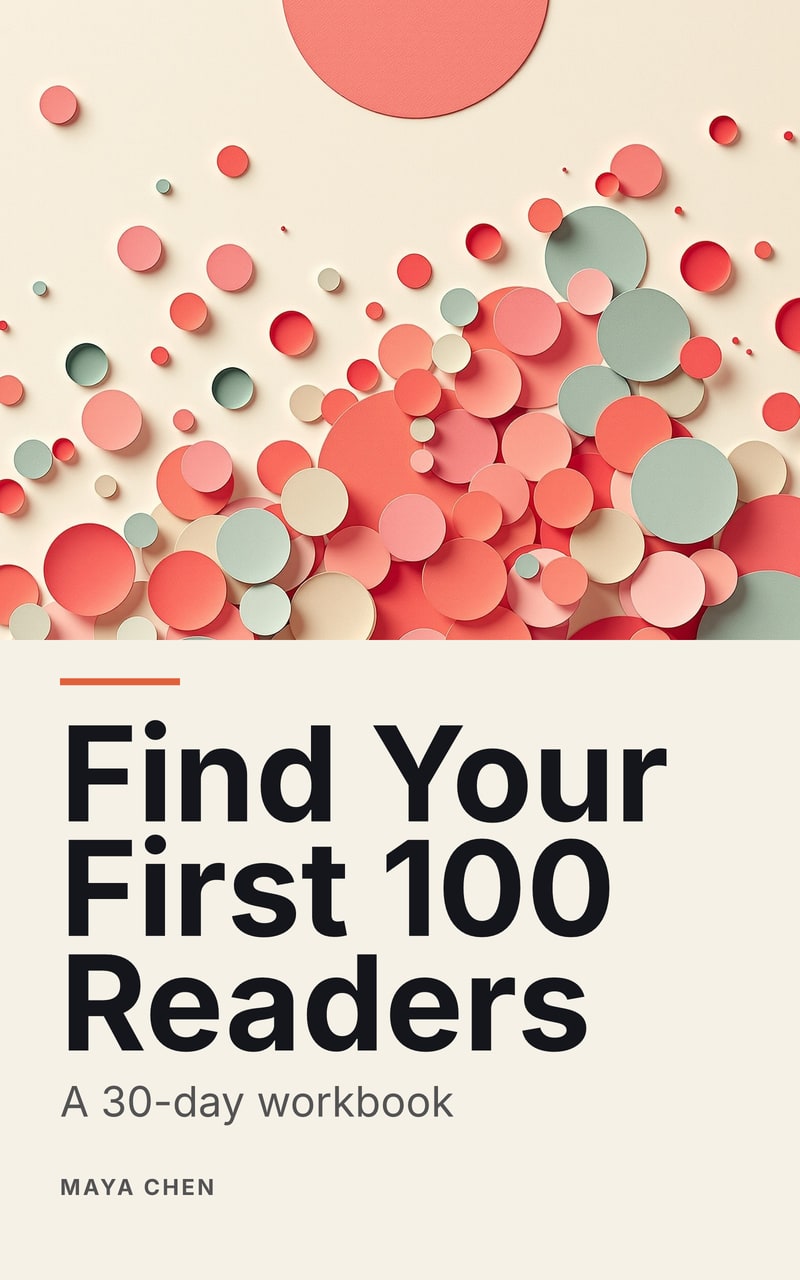
Make a workbook when knowing isn’t the hard part. If people can agree with your advice and still not do it, they need prompts and blanks, not more explanation. It suits courses, coaching programs, workshops and any change that takes more than one sitting. The sample on this page works through a 30-day plan, week by week. For the details of building one, see how to make a workbook for your course.
Make an ebook when the subject needs an argument, stories and room. It can stand on its own as a product or show the depth of your thinking to clients. It takes far longer to write, and a reader needs a good reason to start one.
Selling or giving away changes the choice
A title on KDP reaches readers through Amazon, at a list price. The lowest list price KDP allows is $0.99, and its 70% royalty band runs from $2.99 to $12.99 (checked 29 October 2026). KDP also limits new titles to 2 per format per week, so a batch of short guides takes planning.
A free guide on your own page reaches readers through your list, and no store sets its price or its timing. If the point of the book is to start a conversation with the reader, give it away from a page you control. If the point is the book itself, sell it.
Common mistakes
- A book offered as a lead magnet. A 30,000-word download is likely to be saved and forgotten. Offer one chapter’s worth of help and keep the rest for later.
- A workbook with no room to work. If it is mostly paragraphs with a question at the end of each chapter, it is a book with homework. Give the exercises real space on the page.
- A lead magnet that only teases. If the reader needs to buy something to get any result at all, they will read it as an advert.
Where Chapbook fits
Chapbook makes all three, and each is a kind you pick in the brief, or let the assistant pick for you. A lead magnet runs 1,000 to 10,000 words and a workbook 1,000 to 20,000. What this page calls an ebook is Chapbook’s nonfiction book, at 5,000 to 40,000. Lead magnets and workbooks have a Next step page on by default, which prints once you add a link. A workbook can turn on fillable answers in its digital PDF. Workbooks and nonfiction books also export a KDP-sized paperback interior. Chapbook does not upload to any store, and on a paid plan a book can have its own page that collects readers’ sign-ups.
What to do
-
Write down what the reader does next
Finish this sentence: “After reading this, they will…” Fix one thing today points to a lead magnet. Work through a process over days points to a workbook. Understand a subject points to a book.
-
Decide what you want from them
An email address, a finished exercise and a sale ask different things of a reader. Pick the one you want most, because a single book rarely does all three well.
-
Check you have enough, or not too much
If your idea takes more than one sitting to explain, it is too big for a lead magnet. If you can’t fill several chapters without padding, it is too small for a book.
-
Start small if you are unsure
Write the lead magnet first. It takes less time and shows you which questions readers ask, and the best-received part can grow into a workbook or a book later.