How to write a lead magnet people actually read
Promise one result to one named reader, deliver the first part of it on the first pages, and cut whatever does not serve that result. People finish a lead magnet because it solves something they have today, so skip the background, give each section one point, say that point in its heading, and end on one next step.
Start with the promise, not the topic
“A guide to pricing” is a topic. It gives the reader no reason to open it today, and it gives you no test for what to leave out. A promise does both.
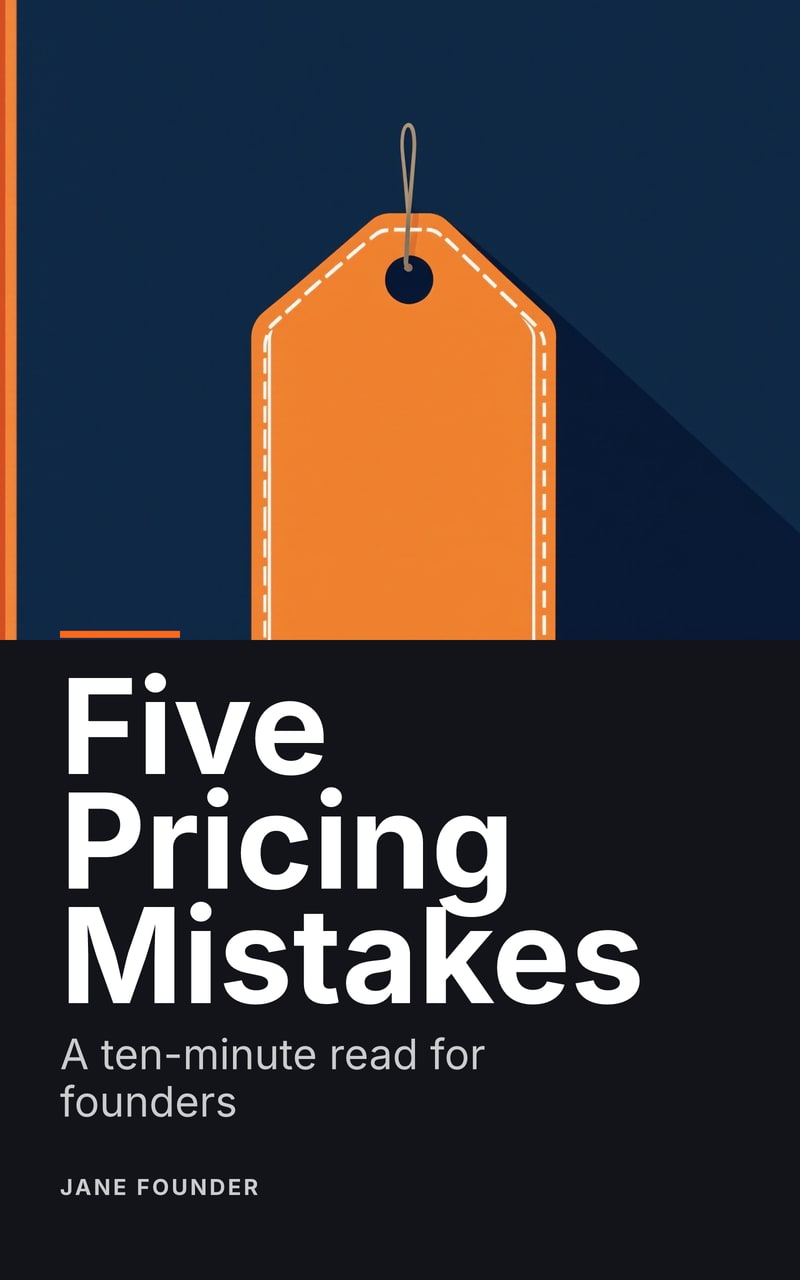
Compare the promise behind the sample on this page: in ten minutes, a founder will recognize which of five pricing mistakes they are making and know the first step to fix each one. A reader can tell whether the result was delivered. So can you, section by section, as you write.
Check the time limit the same way, because this one doesn’t hold: at about 238 words a minute, the sample’s length takes the average reader about sixteen minutes, not ten. Before you promise a time, divide your word count by that rate.
Good promises share three things: a result the reader can check, a time limit the length can keep, and a scope small enough to finish. If yours covers everything about a subject, it is a book. Pick the part someone needs first.
Write for one person
The reader for that same sample is a technical founder who set the price by copying a competitor or guessing, and suspects it is wrong. “Founders” would not do the same work. That one sentence tells you which mistakes to include, what you can skip explaining, and which examples will feel familiar.
Try writing the reader’s situation as the moment just before they went looking for help. You will end up using the same words they would search for, in your title and your headings.
Make the first page earn the second
The easy way to lose a reader is to open by explaining why the subject matters, to someone who signed up because they already think it does. Cut that, along with the welcome note, the definition of the term and the long story about you.
Open on the problem as the reader sees it, then give them the first thing they can use. Readers who get something on page one have a reason to believe page two will pay off. Your story belongs at the end, where it answers the question “who wrote this?”
Let the headings do the work
Some readers skim before they decide to read. A heading like “Background” tells a skimmer nothing, while “Mistake 1: Copying a competitor” tells them the point and whether it applies to them. Read your headings in order with the text hidden. They should make your argument on their own.
Keep to one point per section. If a section needs a second heading, it probably wants to be two sections, or one fewer idea. Short sections also make the length easier to live with: at about 238 words a minute, the average adult reading rate for non-fiction in Brysbaert’s 2019 review, a 500-word section takes about two minutes. For overall targets, see how long a lead magnet should be.
Be specific in ways a stranger can’t copy
General advice is everywhere and free. What people can’t find elsewhere is the case you worked on, the number you saw, the thing that went wrong and how you fixed it. One real example usually does more than three principles.
Only use what is true and yours to share. A made-up statistic or a client story told without permission can cost you the trust the guide was written to earn.
End on one next step
A reader who finishes has just had the best experience of you they’ve had so far. Ask for one thing that follows from the result: book the call, try the template, read the next guide. Say what happens when they click. Several offers at once usually means none of them gets picked.
Where Chapbook fits
Chapbook’s brief asks you for these things up front: the reader, the promise and the voice. Drafting can read a voice profile made from up to 5 pieces of your writing and up to 10 sources of your own material, and the assistant’s later changes arrive as suggestions to accept or reject. A lead magnet’s Next step page is on by default and prints once you add a link, as a button, the address and, in the PDF, a QR code. The sample on this page was generated from one brief and exported unedited, so you can judge the draft for yourself. A draft is where this work starts: the examples only you know are still yours to add.
What to do
-
Finish the sentence “By the end, you will…”
Write the promise first, in terms a reader could check: a list made, a mistake found, a decision taken. If nobody could tell whether you kept it, rewrite it.
-
Name one reader and their situation
Describe one person and what has just gone wrong for them. Everything else, from the examples to the words you can skip explaining, follows from this.
-
Draft only the headings
Write each section’s point as a heading and read them in order. If the list alone makes the argument, the structure is ready. If it doesn’t, fix it before you write the text.
-
Move the first useful thing to page one
Delete your opening paragraph and see whether anything is lost. Put your bio and your story at the end, where people who found the guide useful will want them.
-
Add one example only you could give
Replace a general statement with a real case from your work, with permission where you need it. This is what makes it worth reading and hard to copy.
-
Watch one reader go through it
Ask someone from the audience to read it and tell you where they stopped. Fix that place first, since nothing after it was read.