Lead magnet ideas for consultants
A consultant’s best lead magnet shows how you diagnose a problem, so a buyer can see your thinking before they pay for it: the mistakes you find in every engagement, a scorecard they can run on their own company, or a way to brief a consultant well. Here are ten, each a brief that opens in Chapbook, and one expanded into the outline it produced.
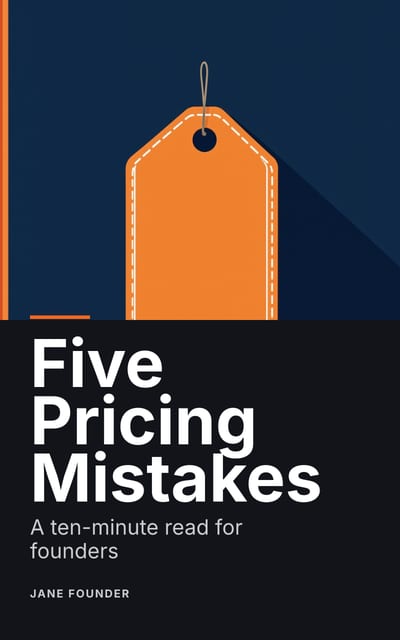
Five Pricing Mistakes
A ten-minute read for founders, by Jane Founder
Lead magnet, 3,735 words, 17 pages
The outline the planner proposed from its brief, chapter by chapter:
- 01 Introduction 291 words
- 02 Mistake 1: Copying a competitor 558 words
- 03 Mistake 2: One tier for everyone 588 words
- 04 Mistake 3: Never asking 608 words
- 05 Mistake 4: Anchoring on your costs 641 words
- 06 Mistake 5: Never revisiting the number 606 words
- 07 What to do instead 411 words
10 ideas, each a brief to start from
-
The mistakes you find in every engagement
You see the same few mistakes in nearly every first week. Named plainly, each with its first fix, they let a buyer check their own company. Five Pricing Mistakes, expanded on this page, is this idea written for software founders.
Lead magnet Expanded above: the outline it produced. Start from this brief: The mistakes you find in every engagement
-
The scorecard from your diagnostic
Your first-week diagnostic is valuable and mostly invisible. A short version an operations lead can run alone shows them the gaps, and gives you both something specific to discuss.
Lead magnet Start from this brief: The scorecard from your diagnostic
-
How to brief a consultant
Many buyers have never hired a consultant and fear looking foolish. A guide to writing a good brief helps them, and the good briefs that follow are easier for you to answer.
Lead magnet Start from this brief: How to brief a consultant
-
The business case your champion needs
The person who wants to hire you usually has to convince someone else. A short document that helps them make that case, in their boss’s terms, works on your behalf in meetings you won’t attend.
Lead magnet Start from this brief: The business case your champion needs
-
The first ninety days after a big change
Buyers look for help when something has just changed. A workbook for that exact moment reaches them when the problem is new and they are still deciding how to handle it.
Workbook Start from this brief: The first ninety days after a big change
-
A decision guide for a choice they will make once
Choices made once a decade have no in-house experience behind them. Laying out the options fairly shows you know the terrain and don’t need to oversell any one path.
Lead magnet Start from this brief: A decision guide for a choice they will make once
-
Your method, explained in pictures
A method described in a proposal sounds like everyone else’s. Drawn step by step with a worked example, it becomes something a buyer can repeat to a colleague.
Illustrated guide Start from this brief: Your method, explained in pictures
-
The book that makes you the name in your niche
A book on one narrow problem gives you something to send before a keynote or a large proposal. It sets out your position in more depth than a website or a slide deck can.
Nonfiction book Start from this brief: The book that makes you the name in your niche
-
A year of your best client memos
You already write sharp notes and articles for clients. Collected and cleaned of anything confidential, they prove your judgment over time, on real questions, in your own voice.
Collection Start from this brief: A year of your best client memos
-
A brochure a client can forward
Most work comes through someone who knows you telling someone who doesn’t. A short brochure makes that handoff simple: the problem you solve, who it suits, and how a first conversation goes.
Brochure Start from this brief: A brochure a client can forward
How to choose one
Start from where deals stall. If buyers don’t yet believe they have the problem, write the scorecard or the list of mistakes. If they believe it and can’t get budget, write the business case. If they have budget and have never hired anyone like you, write the guide to briefing a consultant.
Stay narrow. A guide to on-time delivery for plants of fifty to three hundred people reaches the right operations director. “Operational excellence” reaches no one in particular, and your competitors could have written it.
Every brief here opens in Chapbook
Each idea comes with the paragraph Chapbook needs to start: the topic, the reader and the voice. Open one, change the industry and the buyer to yours, and add your own articles or anonymized notes as sources. Chapbook proposes titles and an outline to approve before anything is drafted. The first idea is shown expanded: the outline the planner proposed for it, and the book it became.
Questions people ask
What makes a good lead magnet for a consultant?
One that demonstrates your diagnosis on a problem the buyer already feels. A scorecard or list of common mistakes lets them test your thinking against their own company before they talk to you.
Should a consultant publish their framework?
Usually, yes. Knowing the steps is rarely what a client pays for. They pay for judgment on their situation and help getting it done, so a published framework can show the method without replacing the engagement.
Can I use client work in a lead magnet?
Only with permission, and with confidential details removed. Chapbook sends your sources to AI providers to draft from, so upload anonymized notes, not client documents. Its privacy policy asks you to leave sensitive personal data out.
Read a chapter of your own book before you pay for it.
The outline, one sample chapter up to 2,500 words and a watermarked cover are free: 60 Book Credits on sign-up, no card.