Lead magnets and method books for consultants
Consultants use Chapbook to put the method they sell into a short book a prospect can read before the first call: a diagnostic guide that collects sign-ups, a workbook for a workshop, or the book of the method itself. You bring your decks and notes as sources and approve the outline; Chapbook drafts in your voice and typesets the result.


What consultants make with Chapbook
- Lead magnet 1,000–10,000 words
- A diagnostic guide to the problem you are hired for, given away from a page that records which talk or post each sign-up came from.
- Workbook 1,000–20,000 words
- The exercises from a workshop or an engagement, so a client team does the thinking between your visits, on paper or in a fillable PDF.
- Nonfiction book 5,000–40,000 words
- The book of your method at a length a busy buyer might finish, drafted against an outline you approve, and also available as a KDP-sized paperback.
- Brochure 200–1,500 words
- A short booklet to send after a first meeting: what you do, how an engagement runs, and what the client's first month looks like.
“My method is the product. A model will flatten it.”
It will if all it has is a paragraph, so give it the method: the framework deck as a PDF, the diagnostic you run, a proposal with the client’s name taken out. Chapters draw on those sources and can cite them inline, and two or three pieces you wrote yourself become the voice profile drafting follows.
The outline is where a method survives or gets lost. You see every chapter before a word is drafted, and you can reorder the steps, rename them and cut the ones the planner added. After that, each change the assistant proposes is a suggestion you accept or reject.
“I can’t put client work into an AI tool.”
You shouldn’t, and the book doesn’t need it. What you send goes to the AI providers named in the privacy policy, so remove names, figures and anything an NDA covers before you upload. Sources stay inside your account: a public page or a reading link never shows them.
Where a chapter needs a case, ask for a composite and say that it is one. The sample on this page runs one fictional company through every worked example and says so at the start, which is a fair way to show how the work goes without naming anyone.
“Will a book actually bring in work?”
We can’t promise that, and nobody honest can. What you get is a way to see what happens next. Give the book a named link for each talk, podcast and post, and the page shows the views and sign-ups from each one. The last page of the book can send readers to your booking link, and that link arrives tagged in your analytics. Whether a reader becomes a client is still your sales conversation.
The sample on this page
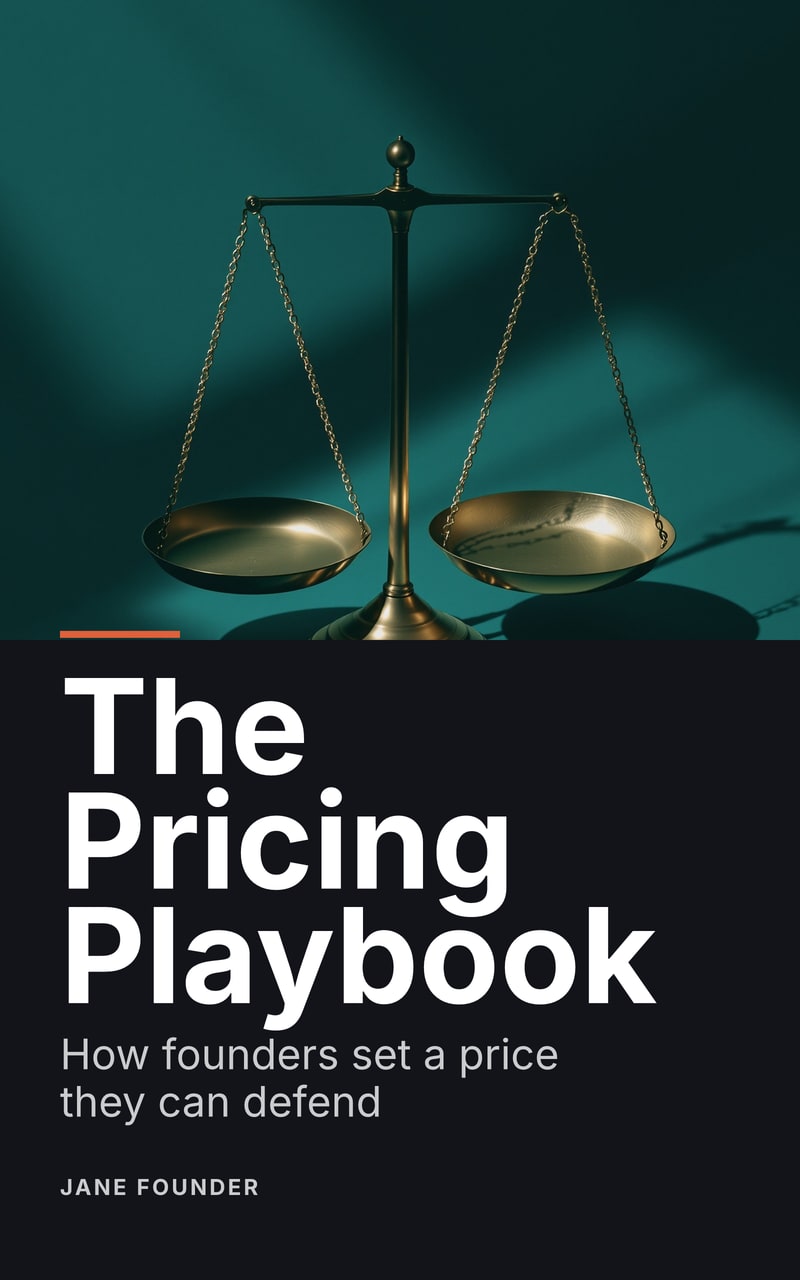
The Pricing Playbook is a method book: ten customer interviews, one value metric, three tiers and a quarterly review, in order, each ending in a task. It was generated from one brief and exported without editing. It is about pricing software rather than a consulting practice, but a book of your method takes the same shape. The brief beside this text is what a consultant’s version could start from.
What it does not do
Chapbook does not write proposals, keep a pipeline, schedule calls or take payments, and there is no shared workspace for a firm. It writes nonfiction in English, Spanish, German, French, Portuguese (Brazil), Italian and Dutch. It does not check your claims against your engagements, so every number and story in the book is yours to confirm before it goes out.
Ideas
- Lead magnet ideas for consultants Ten lead magnet ideas for consultants, each a brief you can open in Chapbook and change, with one expanded into the real outline it produced.
- Lead magnet ideas for HR consultants Ten general-education lead magnet ideas for HR consultants, each a brief to open in Chapbook. You review every draft for your own jurisdictions, and employee data stays out.
Words to know
- What is a lead magnet? A lead magnet is something useful given away free in exchange for an email address. What makes one work, the usual formats, and how it differs from an ebook.
- What is double opt-in? Double opt-in means a new subscriber confirms their address from an email before joining a list. Why lists use it, and how it works with Chapbook's sign-ups.
Questions people ask
Can I use my slide decks as source material?
Yes. Export a deck as a PDF with selectable text and add it as a source; a book holds up to 10 sources, and chapters draw on them. Scanned PDFs are not read.
Is it safe to upload client documents to Chapbook?
Take out anything confidential first. Chapbook sends your brief and sources to AI providers to do the work you ask for, and its privacy policy asks you not to include sensitive personal data. Your NDA is yours to keep.
Can a consultant's book end with a link to book a call?
Yes. A Next step page closes the PDF, EPUB and Word file with a button and your link, tagged for your analytics unless you turn that off. The PDF adds a QR code for printed copies.
How long is a consultant's method book in Chapbook?
A nonfiction book in Chapbook runs 5,000 to 40,000 words. You set the length of each chapter in the outline before anything is drafted.
Can colleagues at my firm work on the same book?
Not in one account. Chapbook accounts are personal, with no teams or shared seats. A private reading link lets a colleague read the draft without an account; comments happen outside the app.
Read a chapter of your own book before you pay for it.
The outline, one sample chapter up to 2,500 words and a watermarked cover are free: 60 Book Credits on sign-up, no card.