Lead magnets and client workbooks for coaches
Coaches use Chapbook to turn what they already teach into a short book with their name on it: a lead magnet that collects sign-ups from its own page, a workbook clients fill in between sessions, or the signature book of their method. You write one paragraph and approve the outline; Chapbook drafts each chapter and typesets the result.


What coaches make with Chapbook
- Lead magnet 1,000–10,000 words
- A free guide to the problem clients bring you, given away from a book page that collects each reader’s email address.
- Workbook 1,000–20,000 words
- Lessons, fill-in exercises and a checklist at the end of each week, so clients do the work between sessions.
- Nonfiction book 5,000–40,000 words
- The signature book of your method, drafted chapter by chapter against an outline you approve.
It sounds like you
Add two or three pieces you wrote yourself, a newsletter issue, a talk, a long post, and Chapbook reads them into a voice profile that drafting follows. Bring your course notes, slides as PDFs or the pages of your site as sources, and chapters draw on what you actually teach rather than on what a model guesses coaches say.
You decide what the book is before anything is drafted: the brief names the client, the promise and the tone, and the outline is yours to reorder and rewrite. Afterwards, every change the assistant proposes arrives as a suggestion you accept or reject.
It looks like a book
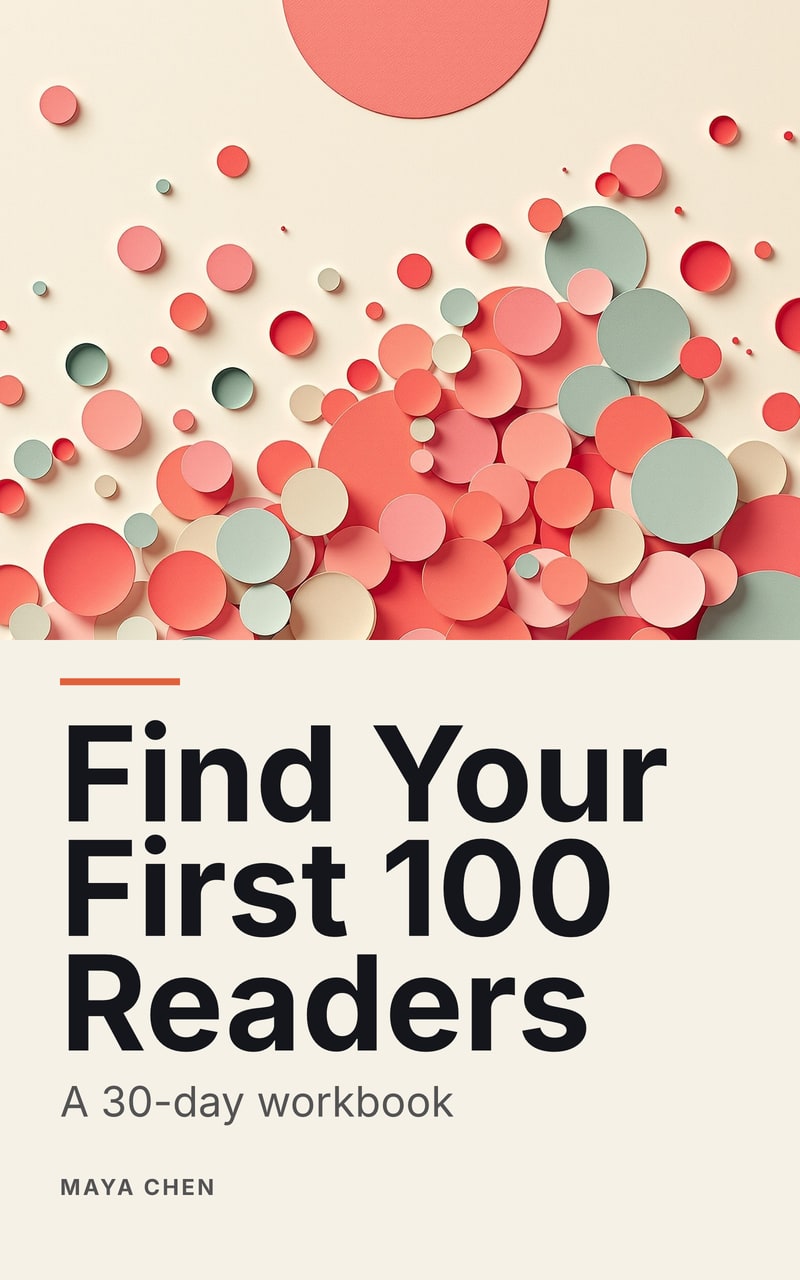
The sample on this page is a 30-day workbook: short lessons, a fill-in exercise after each, and a checklist at the end of every week. It was generated from one brief and exported without editing. It is not a coach’s book, but a client workbook takes the same shape. Typst sets the pages, with running heads, a linked contents page and the fonts embedded, in a look you choose or one you describe in your own words.
It brings readers
On a paid plan a book gets a public page at your own address. A reader signs up to download the PDF, and the sign-up lands in your Readers list with the named link that brought them, so you can see whether the podcast, the LinkedIn post or the workshop handout worked. The list exports to CSV for your email tool, which sends the welcome. Chapbook itself never emails your readers.
What it does not do
Chapbook writes nonfiction only, in English, Spanish, German, French, Portuguese (Brazil), Italian and Dutch. A workbook or a book also comes as a KDP-sized paperback, interior and wrap cover. It does not run sessions, take payments or host a course, and it does not send email to anyone on your list.
Ideas
Words to know
- What is a lead magnet? A lead magnet is something useful given away free in exchange for an email address. What makes one work, the usual formats, and how it differs from an ebook.
- What is double opt-in? Double opt-in means a new subscriber confirms their address from an email before joining a list. Why lists use it, and how it works with Chapbook's sign-ups.
Questions people ask
Will a book made with Chapbook sound like me?
Drafting reads a voice profile made from up to 5 pieces of your own writing, and every later change the assistant proposes is a suggestion you accept or reject.
Can I use my own course material?
Yes. Add up to 10 sources (PDFs, documents, text or web pages) to a book; chapters draw on them and can cite them inline.
Can clients fill in a Chapbook workbook on screen?
Yes. Turn on Fillable answers in a workbook's look and clients can type on the answer lines and tick the boxes in the PDF, in any PDF app that fills in forms, including web browsers. The EPUB, paperback interior and Word file stay as they are.
Do I need a paid plan to give the book away?
Yes. Files without the watermark and the public book page start with the Creator plan at $29 a month; the outline, one chapter of up to 2,500 words and a watermarked cover are free.
Is Chapbook a coaching platform?
No. Chapbook makes the book and the page that collects its readers; sessions, payments and courses stay in the tools you already use.
Read a chapter of your own book before you pay for it.
The outline, one sample chapter up to 2,500 words and a watermarked cover are free: 60 Book Credits on sign-up, no card.