Lead magnet ideas for newsletter writers
The strongest lead magnet for a newsletter comes from the archive: a start-here collection of your best issues, a reference your readers keep asking for, or a guide to the one question your newsletter keeps returning to. Here are ten, each a brief that opens in Chapbook, and one expanded into the outline it produced.
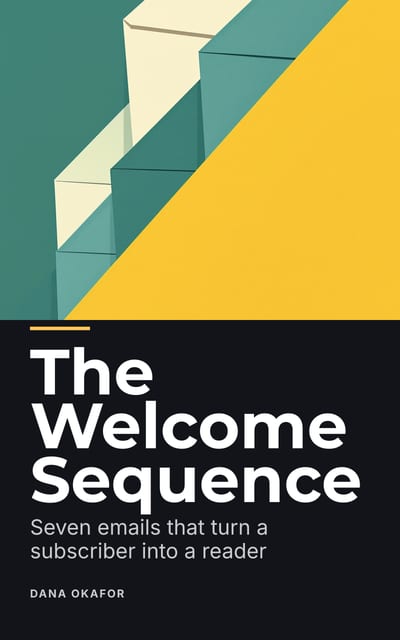
The Welcome Sequence
Seven emails that turn a subscriber into a reader, by Dana Okafor
Lead magnet, 3,626 words, 17 pages
The outline the planner proposed from its brief, chapter by chapter:
- 01 Introduction 282 words
- 02 Email 1: The one they actually open 681 words
- 03 Emails 2 and 3: Who you are and what to expect 729 words
- 04 Emails 4 and 5: Your best two pieces, reframed 669 words
- 05 Emails 6 and 7: The ask, and the door left open 743 words
- 06 The schedule and the template 478 words
10 ideas, each a brief to start from
-
A guide to your own craft for newer writers
If some of your readers write newsletters too, they will gladly take a practical guide to the work. The Welcome Sequence, expanded on this page, is this idea: seven welcome emails with a schedule, written for someone starting out.
Lead magnet Expanded above: the outline it produced. Start from this brief: A guide to your own craft for newer writers
-
The start-here collection
A new subscriber can’t read four years of archive. Your best issues, in order and with a short introduction, give them the reason everyone else stayed and something to pass on to a friend.
-
The reference your readers keep asking for
When the same question lands in your replies every month, the answer is your next lead magnet. It saves you writing the reply again and is a reference people keep.
Lead magnet Start from this brief: The reference your readers keep asking for
-
A year in review, as a designed issue
A designed look back gives old subscribers something to forward and new ones a quick way in. It is written from what you already published, so it never claims more than your archive shows.
Newsletter Start from this brief: A year in review, as a designed issue
-
The explainer behind your beat
Every beat has one complicated thing you assume readers know. An illustrated explainer lets you stop assuming, and brings in people who were too shy to ask.
Illustrated guide Start from this brief: The explainer behind your beat
-
The reading list only you could write
Readers follow you for your taste and judgment. A list with a sentence on why each item matters, sorted by where a person is starting from, is hard to copy and easy to recommend.
Lead magnet Start from this brief: The reading list only you could write
-
A workbook for the habit you write about
Readers often enjoy an idea for years without acting on it. A short workbook on the habit your newsletter covers gives them a way to start, and gives you a list of people who took a step.
Workbook Start from this brief: A workbook for the habit you write about
-
Your best interviews, in one place
Interviews age well and are scattered through an archive. Gathered and introduced with a line on why each one still matters, they show the range of people who talk to you.
Collection Start from this brief: Your best interviews, in one place
-
The book your archive already contains
After years of issues on one subject, you may have a book’s worth of thinking. Import the ones that hold up, and shape them into chapters to give readers something to buy or to give away.
Nonfiction book Start from this brief: The book your archive already contains
-
A one-page brochure for sponsors and partners
Sponsors and other writers want a quick answer about who reads you. A short brochure can give that with the numbers from your own dashboard, written in only when they are true on the day you send it.
Brochure Start from this brief: A one-page brochure for sponsors and partners
How to choose one
Read your replies. If people keep asking where to start, make the start-here collection. If they keep asking the same question, write the reference. If your subscribers do something for a living or at home because of what you write, make a workbook that helps them do it.
The newsletter-to-ebook page shows how an archive becomes a book through “I have a draft.” Your readers already know your voice, so a lead magnet from your archive should stay in it: bring in your own issues and let Chapbook typeset them without changing your words.
Every brief here opens in Chapbook
Each idea comes with the paragraph Chapbook needs to start: the topic, the reader and the voice. Open one, change the beat and the subscriber to yours, and add past issues as sources. Chapbook proposes titles and an outline to approve before anything is drafted. The first idea is shown expanded: the outline the planner proposed for it, and the book it became.
Questions people ask
What makes a good lead magnet for a newsletter?
One that shows a new subscriber why the rest of your readers stayed. It usually comes from the archive, as a start-here collection or as the reference people keep asking you for.
Can I turn my newsletter archive into a book without rewriting it?
Yes. “I have a draft” reads your posts in word for word as chapters, for no credits: up to 20 links or 10 files at a time. You then reorder them and choose a look.
Does Chapbook email my subscribers?
No. Chapbook never emails a reader. Sign-ups land in your Readers list and export as a CSV marked unconfirmed, so your own email tool sends its own confirmation.
Read a chapter of your own book before you pay for it.
The outline, one sample chapter up to 2,500 words and a watermarked cover are free: 60 Book Credits on sign-up, no card.