Lead magnet ideas for course creators
A course creator’s lead magnet should give a beginner their first small win in your subject, so buying the course feels like the next step: a two-week starter workbook, the module people ask about most, or a check on whether they are ready. Here are ten, each a brief that opens in Chapbook, and one expanded into the outline it produced.
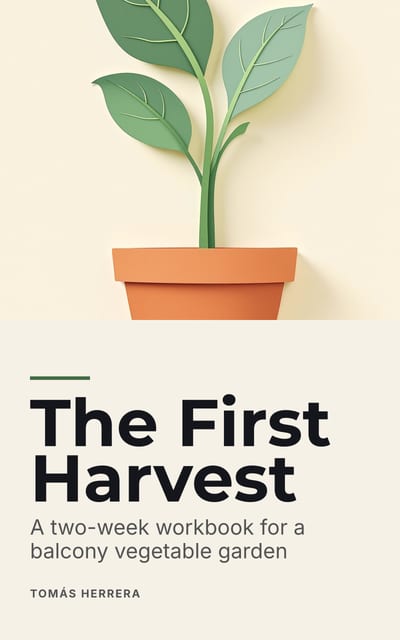
The First Harvest
A two-week workbook for a balcony vegetable garden, by Tomás Herrera
Workbook, 5,175 words, 20 pages
The outline the planner proposed from its brief, chapter by chapter:
- 01 How to Use This Workbook 572 words
- 02 Week 1: Light, Pots and the First Sowing 2,081 words
- 03 Week 2: Water, Thinning and What Goes Wrong 2,119 words
- 04 The Last Page: Your Checklist and Your Harvest Log 373 words
10 ideas, each a brief to start from
-
A two-week starter workbook
A beginner who gets one real result in two weeks now believes they can do this. The First Harvest, expanded on this page, is this idea for a beginner’s gardening subject, with a short lesson and an exercise each day.
Workbook Expanded above: the outline it produced. Start from this brief: A two-week starter workbook
-
Am I ready for this course?
Refund requests often come from people who bought too early. A readiness check sends the right people to your course and gives the others something to do first.
Lead magnet Start from this brief: Am I ready for this course?
-
The module people ask about most
Your sales page comments and DMs show which lesson people want most. Written up as a short book, it demonstrates your teaching on the exact thing they came for.
Lead magnet Start from this brief: The module people ask about most
-
The glossary your students always need
Beginners are often lost in a subject’s words before they are lost in its ideas. A plain glossary gets opened again and again, and it keeps your name beside the subject.
Lead magnet Start from this brief: The glossary your students always need
-
A companion workbook for your free mini-course
If you run a free email course, a workbook gives it a place to live. People who fill in pages are doing the work, and the sign-up page collects the people who want to start it.
Workbook Start from this brief: A companion workbook for your free mini-course
-
The common mistakes in your subject
Experienced teachers can spot a beginner’s errors before the beginner can. A short book on those mistakes shows that experience and spares your future students some of them.
Lead magnet Start from this brief: The common mistakes in your subject
-
The illustrated map of what you teach
Students rarely see how a subject fits together. A picture-led guide to the whole field helps them place themselves, and shows where your course sits within it.
Illustrated guide Start from this brief: The illustrated map of what you teach
-
Student work and what it teaches
Real projects teach more than testimonials can. A collection of a few student stories, with permission, shows prospects the road from their position to where those students ended up.
Collection Start from this brief: Student work and what it teaches
-
A course launch brochure
When a cohort opens, past students and partners need something to share. A short brochure says who it is for and what each week holds, without sending people through a long sales page.
-
The book behind the course
Some people want the ideas before they commit to the videos. A full book sets out your teaching for them, and gives you something to offer podcast hosts and event organizers.
Nonfiction book Start from this brief: The book behind the course
How to choose one
Ask what stops people from buying. If they worry they can’t do it, give them the starter workbook and a first win. If they aren’t sure the course fits, write the readiness check. If they want proof you can teach, write up the module people ask about most.
Decide what the reader will have done when they finish, in words they could say to a friend: “I shot my first lesson” or “I have a plan for my pots.” Leave out income figures and job results. You don’t know them for this reader, and the course should stand on what it teaches.
Every brief here opens in Chapbook
Each idea comes with the paragraph Chapbook needs to start: the topic, the reader and the voice. Open one, change the subject and the student to yours, and add your lesson notes as sources. Chapbook proposes titles and an outline to approve before anything is drafted. The first idea is shown expanded: the outline the planner proposed for it, and the book it became.
Questions people ask
What makes a good lead magnet for a course creator?
A first result small enough to finish in a sitting or a couple of weeks, in the same subject as the course. The reader sees that you can teach and that they can learn it from you.
Can I turn my course material into a book without rewriting it?
Yes. “I have a draft” reads your DOCX, Markdown or text files in word for word as chapters, for no credits. If you’d rather draft fresh, add your lessons as sources and the chapters draw on them.
How long should a course creator’s workbook be?
Long enough for the exercises to be done, not just read. A Chapbook workbook is 1,000 to 20,000 words, and you set each section’s length in the outline before anything is drafted.
Read a chapter of your own book before you pay for it.
The outline, one sample chapter up to 2,500 words and a watermarked cover are free: 60 Book Credits on sign-up, no card.