The First Harvest
A two-week workbook for a balcony vegetable garden · Tomás Herrera
- Type
- Workbook (1,000-20,000 words)
- As generated
- 5,175 words · 20 pages
- Trim and style
- US Letter, 8.5 × 11 in. Modern look, artwork cover.
- First draft
- Uses up to 82 credits
What this shows: one brief, run once through Chapbook at the workbook length and exported without a word of editing afterwards. It is not a customer's book.
The brief
- Topic
- A fourteen-day plan to start a vegetable garden in containers on a balcony, a windowsill or a doorstep
- Promise
- By day 14 you will have pots that drain, seed sown at the right depth, seedlings up and thinned, a second sowing made, and a watering habit that fits your week
- Reader
- Someone with no garden and no experience who has killed a houseplant and concluded they cannot grow anything
- Outcome
- A small container garden they keep alive past the workbook, and a first picking somewhere in week three or four
- Voice
- Second person, a patient neighbour leaning over the balcony rail; a short lesson, then a fill-in exercise; one fictional beginner followed through the fortnight; no invented statistics, no brands, no chemicals
- Positioning
- For people who have killed a plant and stopped there: fourteen short days that end with food actually growing in a pot.
The guided brief in the app asks for exactly these fields.
What the planner proposed
Title options: The First Harvest, Fourteen Days, One Pot, Small Pots, Real Food, You Can Grow This, The Balcony Beginner, Something Green by Sunday. Positioning: For someone with a balcony, a windowsill or a doorstep who has killed a plant and concluded they are not a grower: fourteen short days that put seed into compost and keep it alive. Each day is a plain lesson and a fill-in exercise, so the fortnight ends with pots that drain, seedlings thinned, a second sowing already made, and a watering habit that survives a busy week.
- 01How to Use This Workbookfront, 572 words
- 02Week 1: Light, Pots and the First Sowingbody, 2,081 words
- 03Week 2: Water, Thinning and What Goes Wrongbody, 2,119 words
- 04The Last Page: Your Checklist and Your Harvest Logback, 373 words
Read the chapter synopses the planner wrote
- How to Use This WorkbookPromise: the reader understands why their last plant died, what fourteen days can and cannot deliver, and what each day asks of them. Key points: (1) container growing is a short list of habits (light, depth, water), not a talent; (2) day 14 is not harvest day, the first cutting arrives in week three or four, and saying so early is what stops people quitting in week two; (3) fifteen to twenty minutes a day, a lesson then an exercise, and the exercises are the record they will need later; (4) the whole kit is pots with holes, peat free compost, seed, a watering can and light, and Priya is stated plainly to be invented. Takeaway: honest expectations, a shopping list that ends at five items, and three rules (write in the book, buy nothing else, record what you saw before something died).
- Week 1: Light, Pots and the First SowingDays 1 to 7. Promise: by day 7 the reader has measured their own light, chosen crops that suit it, filled draining pots with fresh compost, sown at the right depth, and seen something come up. Key points: (1) light is the one input that cannot be added later, so it is measured by standing in the spot three times in a day, not guessed from which way the windows face (Day 1); (2) leaf crops tolerate shade, roots want more, fruiting crops want a lot, and the first sowing should be fast enough to prove the method works (Day 2); (3) drainage holes, depth over width, no gravel in the bottom, and somewhere for the runoff to go (Day 3); (4) potting compost rather than garden soil, filled to a gap below the rim and damped before sowing (Day 4); (5) the sowing table and the rule of twice the seed's width, sown thinly, with half of every packet kept back (Day 5); (6) labels and a watering habit tied to something already daily, plus the different rule for seed not yet up (Day 6); (7) reading the first week accurately, including leaning and stretched seedlings (Day 7). Takeaway: Exercises 1 to 7, a filled sowing record, and the Week 1 checklist.
- Week 2: Water, Thinning and What Goes WrongDays 8 to 14. Promise: by day 14 the reader waters properly, has thinned every pot, has diagnosed at least one failure, has a second sowing in compost, and has picked and eaten something however small. Key points: (1) thorough watering until it runs from the holes, then the finger test rather than a schedule, with the watering guide and the fix for compost that has shrunk from the sides (Day 8); (2) the four reasons seed does not come up, read from digging one seed up, and the cheap fix of sowing again today (Day 9); (3) thinning to real spacing, why crowded seedlings collapse at the base, and eating the thinnings as a first small harvest (Day 10); (4) succession sowing every fortnight with the seed held back, and dropping the crop that does not suit the light (Day 11); (5) slugs, snails, aphids, birds and cats handled with hands, a light after dark and a jug of water, never a spray (Day 12); (6) a pot holds a fixed amount of water and food, so the end of a crop is answered with fresh compost and a fresh sowing (Day 13); (7) cutting salad two centimetres above the compost, pulling radish early, picking chard and spinach from the outside, and eating something on day 14 (Day 14). Takeaway: Exercises 8 to 14, a watering log, and the Week 2 checklist.
- The Last Page: Your Checklist and Your Harvest LogPromise: the reader leaves with one page that proves what they did, a place to record what happens after the workbook ends, and a reason to sow again if the fortnight went badly. Key points: (1) a tickable checklist of every habit the fortnight built, with the light audit already ticked because it is the step people skip; (2) a set of dated questions to fill in over the following weeks, including the first seedling, the first thing eaten, and what failed and why; (3) a harvest log of blank lines, because a season of short entries teaches more about one balcony than any book can. Takeaway: the final checklist, the what happened questions, the harvest log, and a closing note that a dead first attempt still leaves the reader knowing their own balcony.
Research plan, 10 items to verify: Verify the germination day ranges and time to picking in the Day 5 sowing table for loose leaf lettuce, rocket, radish, spinach, chard and spring onion, and keep them as ranges rather than single figures, since variety and temperature move them; Confirm the sowing depth rule of about twice the seed's width against the depths printed on ordinary seed packets, and keep the instruction that the packet wins where the two disagree; Check the minimum pot depths given in the table against general container growing guidance, and make sure no crop in the book needs a pot deeper than a beginner would plausibly own; and more.
The book, as exported
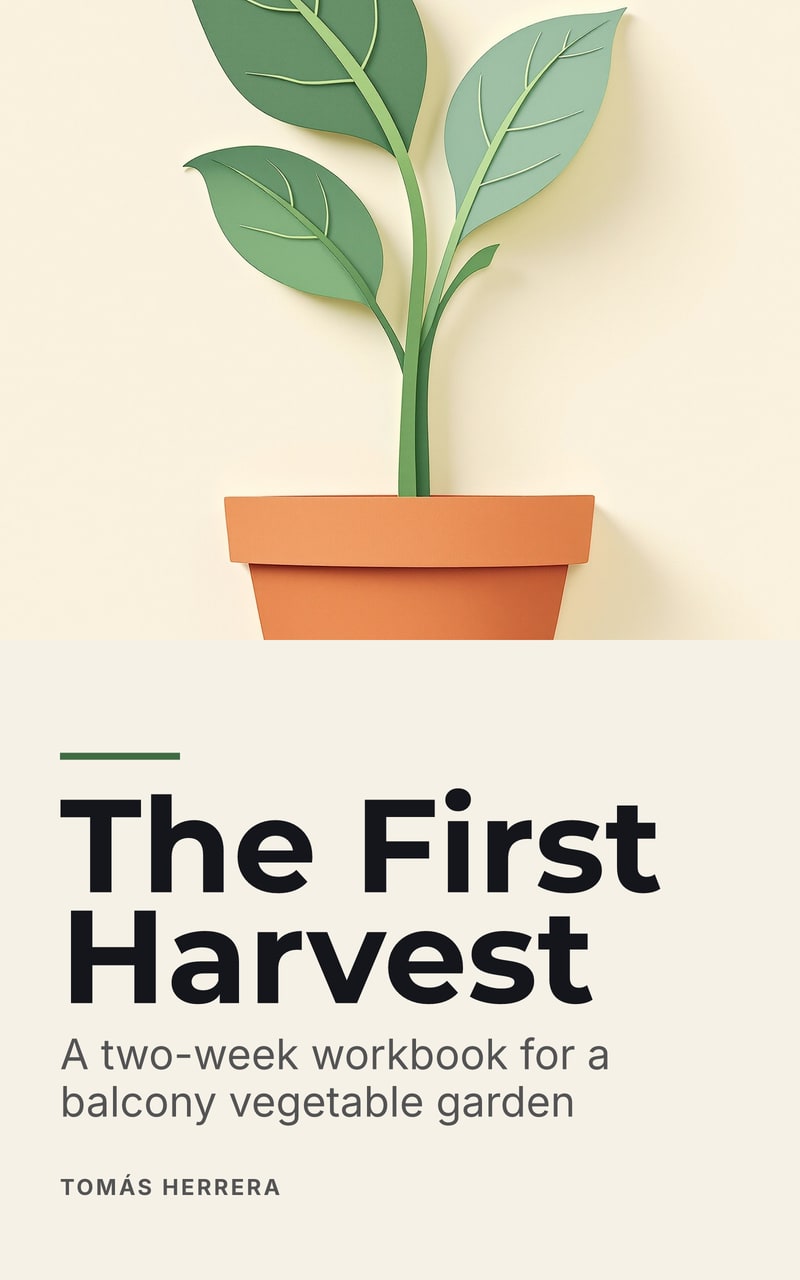


- 20 pages
- Digital PDF, 220 KB, US Letter, 8.5 × 11 in. Fonts embedded, clickable contents, running heads.
- 5,175 words
- EPUB 3, 84 KB, with a navigable table of contents. Validated against EPUBCheck.
- Cover JPEG at 1600 × 2560, the size Amazon KDP asks for. Modern look, artwork cover.
The credit figure above is what this first draft cost at the length it came out: planning, drafting every chapter, one complete review and one cover. Revisions and research add to it. See pricing for the per-action table and a calculator. Ready to write your own brief? Start free.
Write your own brief.
The outline and one sample chapter are free, so the fastest way to see whether Chapbook fits your book is to start one.